Orange Economy: Job Trends & News for 2026
Orange Economy, Creative Economy, Jobs
Orange Economy News & Job Trends in 2026
From Kingston to Bengaluru and Denver to London, the Orange Economy is reshaping how culture, creativity, and work come together. Here’s a clear look at the latest news and what it means for jobs in 2026 and beyond.
Orange Economy News: A Global Snapshot for 2026
The Orange Economy—often called the creative or cultural economy—covers sectors like design, music, film, gaming, crafts, festivals, and more. In mid‑2026, the big story is clear: governments and global institutions are treating creativity as a serious engine of growth, jobs, and identity, not just a “nice to have.”
Rising Recognition and Funding Around the World
In the Caribbean, Kingston Creative in Jamaica became the first Caribbean NGO to win a grant from UNESCO’s Aschberg Programme for Artists and Cultural Professionals, chosen from over 1,000 global applicants. This milestone signals international confidence in Caribbean artists and cultural entrepreneurs (UNESCO).
Across Africa, Namibia has injected N$1.6 million into creative industries, backing local cultural enterprises and signaling that arts and culture belong in mainstream economic planning (IFACCA). In Viet Nam, a new decree on digital cultural infrastructure aims to modernize how cultural content is created, stored, and accessed, laying foundations for a more digital-first creative sector.
In Europe, Italy has formally underlined just how big the Orange Economy already is: the country’s creative industries generate roughly €115.8 billion and employ nearly 1.54 million people (IFACCA). That puts culture and creativity firmly in the same conversation as manufacturing, tourism, and tech when it comes to national prosperity.
India’s Big Bet on Creative Technology
One of the boldest national moves comes from India. The Union Budget 2026–27 explicitly names the Orange Economy—especially animation, visual effects, gaming, and comics (AVGC)—as a strategic growth engine. Through the Indian Institute of Creative Technologies, the government plans Creative Technologies labs in 15,000 secondary schools and 500 colleges, preparing for an estimated 2 million AVGC jobs by 2030 (Government of India).
Festivals and Craft Sectors as Economic Engines
In the United States, Denver’s Underground Music Showcase (UMS) returns July 24–26, 2026, at a new location, with more than 10,000 attendees per day and over 200 performances expected. Organizers forecast a major local economic boost, showing how music festivals can power both community life and small business revenues (Axios).
In the UK, the Crafts Council July 2026 policy brief highlights significant government investment: £132.5 million for enrichment activities in schools and communities, £127.8 million for cultural venues, and £120 million to decarbonize industrial ceramics. At the same time, the report stresses ongoing underinvestment and the need for better research and innovation support (Crafts Council).
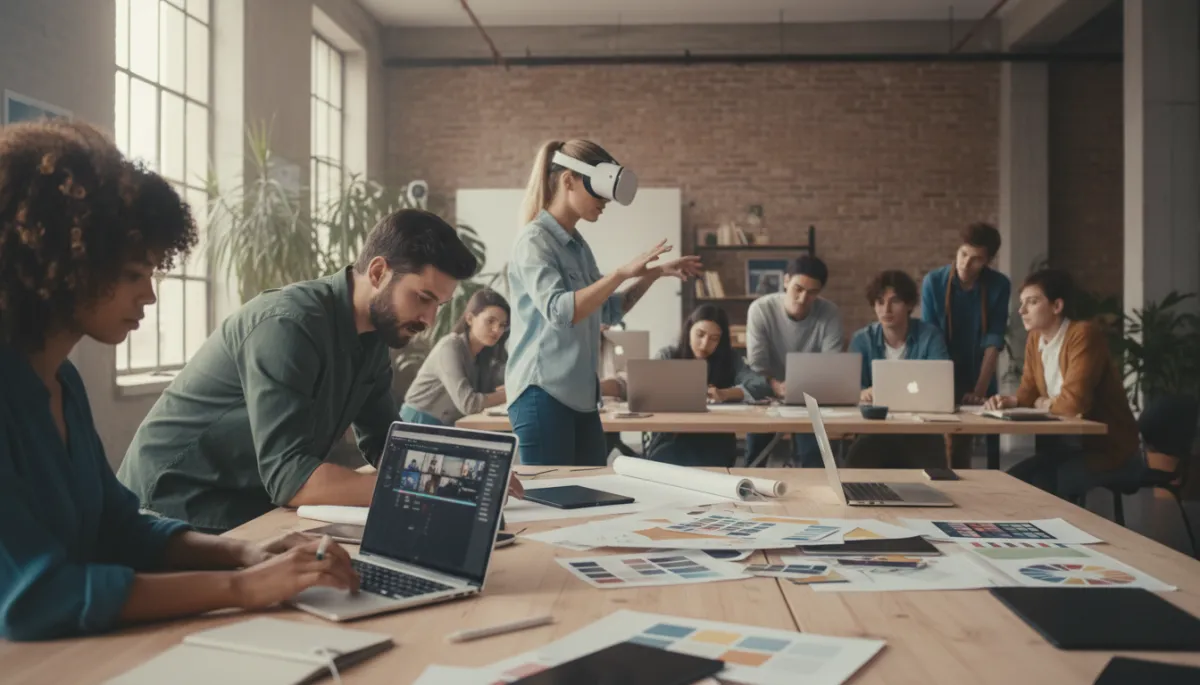
Hybrid creative teams now blend art, technology, and business skills in everyday work.
Job Trends in the Orange Economy: Where Opportunities Are Growing
Behind the headlines, the Orange Economy is also transforming the job market. Some regions—like California—have seen recent declines in traditional creative roles, but globally the sector still represents about 3.1% of GDP and 6.2% of employment, and is poised for further growth (World Governments Summit). Here are the clearest job trends emerging in 2026.
1. Digital Creative Roles Are Surging
As audiences move online, demand is rising for digital-first creatives: graphic designers, video producers, animators, game designers, podcast editors, and social content specialists. Reports from the World Economic Forum and UNCTAD already pointed to digitalization as a core growth driver for creative industries, and 2026 developments confirm that trajectory (WEF; UNCTAD).
2. Cultural Tourism, Festivals, and Live Events Rebound
Events like Denver’s UMS highlight a wider trend: people are eager for shared cultural experiences. This fuels roles in event management, festival production, stage and sound design, cultural tourism marketing, and local hospitality. Cities that invest in music, arts, and heritage festivals often see knock‑on job growth in hotels, food, retail, and transport.
3. Art–Tech Hybrid Careers: VR, AR, and AI‑Assisted Creation
New roles are emerging at the intersection of creativity and technology: VR and AR content designers, immersive experience producers, and AI‑assisted illustrators, writers, and editors. A 2026 study on the “next creative economy” notes that AI‑generated content is flooding platforms, yet only a small share wins real audience attention, creating demand for professionals who can combine human taste with smart use of tools (Dream Machine).
Adobe’s Creators’ Toolkit Report 2026 shows 87% of surveyed creators say AI has helped grow their business or audience, and 75% call it “integrated” or “essential” to their workflows (Adobe). That supports job growth not just for artists, but also for AI‑literate producers, editors, and strategists.
4. Sustainable Design and Eco‑Art on the Rise
As climate concerns deepen, more brands, cities, and cultural institutions are turning to eco‑friendly design and sustainable creative practices—from low‑impact fashion and upcycled crafts to green festivals and decarbonized ceramics. The UK’s £120 million push to decarbonize industrial ceramics is one example of how environmental policy can translate into new roles for designers, materials specialists, and creative technologists.
5. Music, Streaming, and the Creator Economy
Streaming platforms remain central to how music, film, and short‑form content reach audiences. The broader creator economy is expected to surpass $230 billion globally in 2026, with the U.S. market alone projected above $40 billion (The State of the Creator Economy 2026). This fuels demand for musicians, producers, sound engineers, editors, marketers, and community managers who can build and sustain audiences over time.
6. Education, Training, and Lifelong Learning in the Arts
With countries like India rolling out creative labs in thousands of schools and colleges, and the UK investing heavily in enrichment activities, the Orange Economy is generating more roles in creative education: workshop leaders, online course creators, arts educators, and mentors. These professionals help people of all ages build portfolios, learn new tools (including AI), and turn creative skills into income.
What This Means for Creative Professionals and Job‑Seekers
Overall, July 2026 confirms that the Orange Economy is no longer a niche conversation. It is a recognized driver of GDP, jobs, and soft power. For individuals, the most promising paths combine:
Creative craft (art, design, storytelling, performance)
Digital fluency (tools for video, audio, 3D, VR/AR, and AI)
Entrepreneurial skills (branding, audience building, basic business and IP awareness)
Whether you are a student, mid‑career professional, or independent creator, the message is encouraging: the Orange Economy is expanding, diversifying, and becoming more professionalized. Those who stay adaptable—pairing creativity with technology and a global outlook—are well‑placed to thrive in the next wave of cultural and creative work.